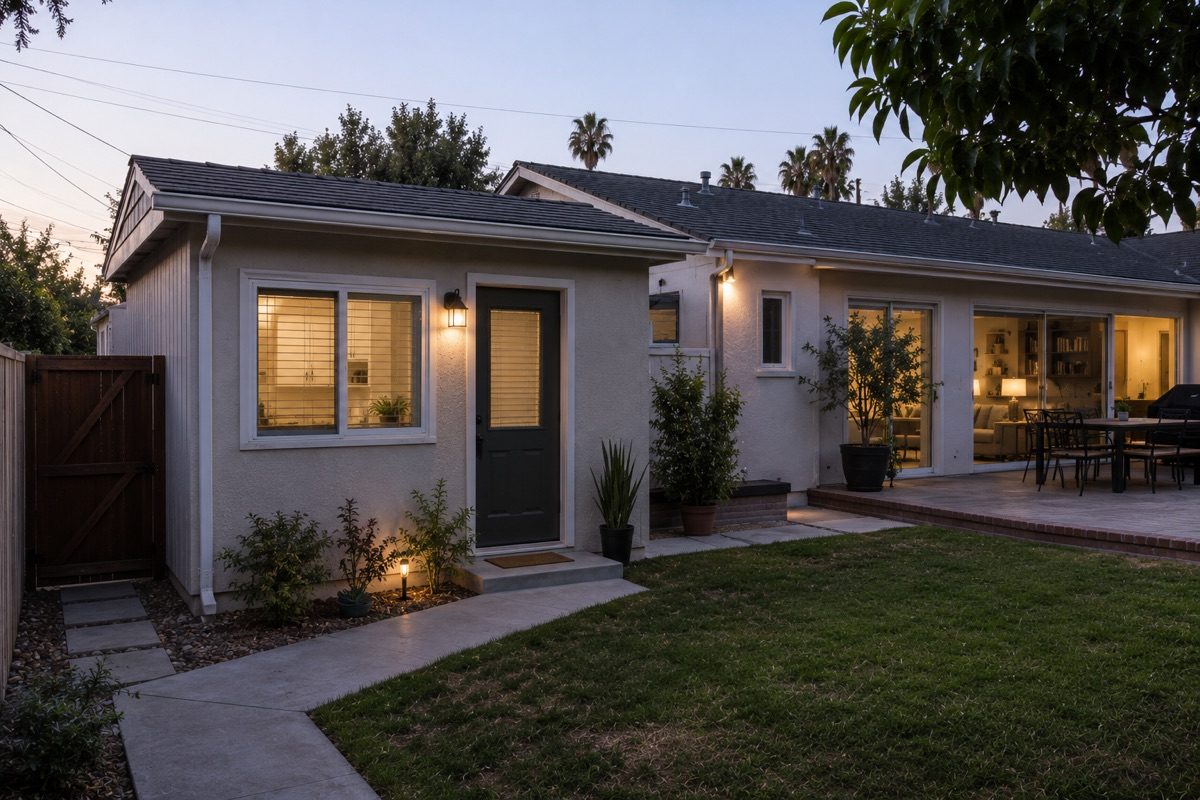
What is a Junior ADU?
A JADU converts space that already exists inside your primary residence's footprint — no new exterior structure, no addition, often no new foundation work at all. Many jurisdictions allow a JADU to share a bathroom or entrance with the main house, which is a big part of why this is generally the least expensive and fastest-permitting ADU type. Exact rules on shared facilities, a required owner-occupancy commitment, and unit size caps vary by city, so your specific JADU rules need to be confirmed locally.
Is a JADU right for you?
What to consider
Trade-offs worth weighing
The smaller footprint and shared facilities that make a JADU cheap and fast also mean it's generally the option with the lowest rental income potential of the ADU types — a real trade-off against the much lower cost and faster timeline. Some cities also require the homeowner to live on-site (in either the main house or the JADU) for at least part of the year, which matters if your plan involves renting out the entire property. If maximizing rental income or resale value is your main goal and your lot has room, a detached or attached ADU may be worth comparing before deciding.
Frequently asked questions
State law allows a JADU to have an “efficiency kitchen” — a smaller kitchen setup that meets specific minimum requirements — rather than a full kitchen, which is one reason JADUs are often the least expensive ADU type to build.
Generally yes, though some cities apply an owner-occupancy condition to permitting a JADU that doesn't apply to full ADUs. Confirm your city's current owner-occupancy requirement before assuming a JADU can be rented out independently.
Not always — unlike most ADUs, a JADU can sometimes share an entrance with the main home, though many homeowners still add a separate entrance for privacy and rentability.